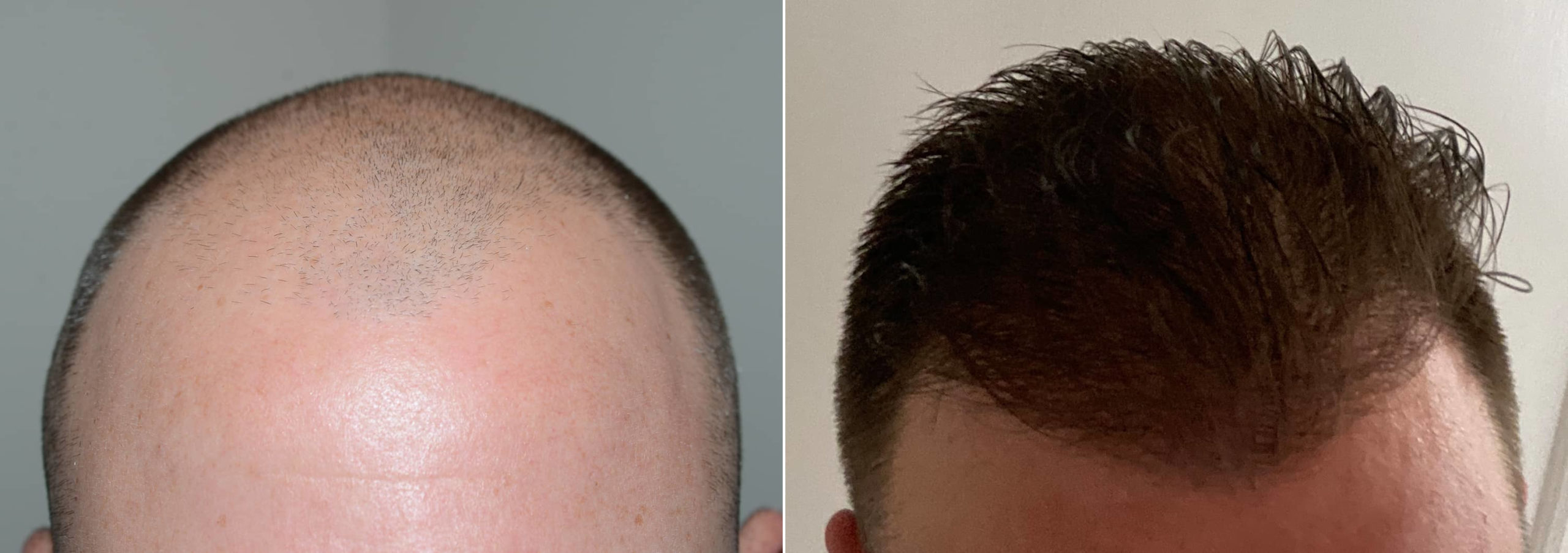
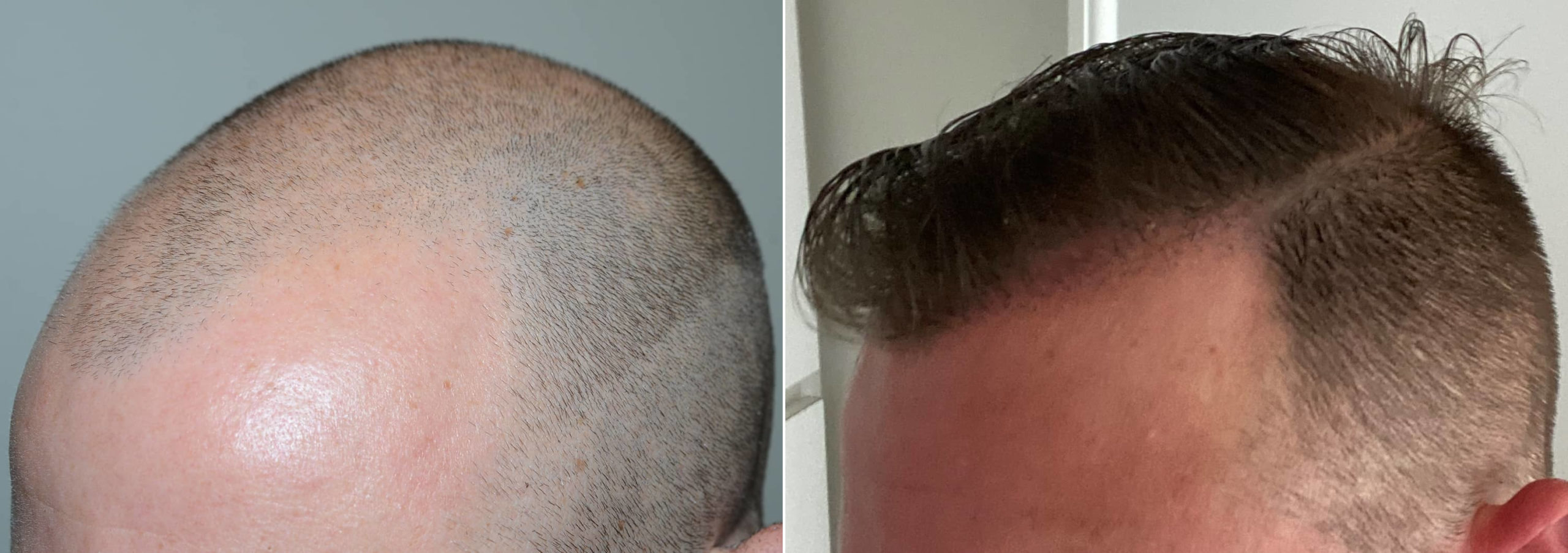
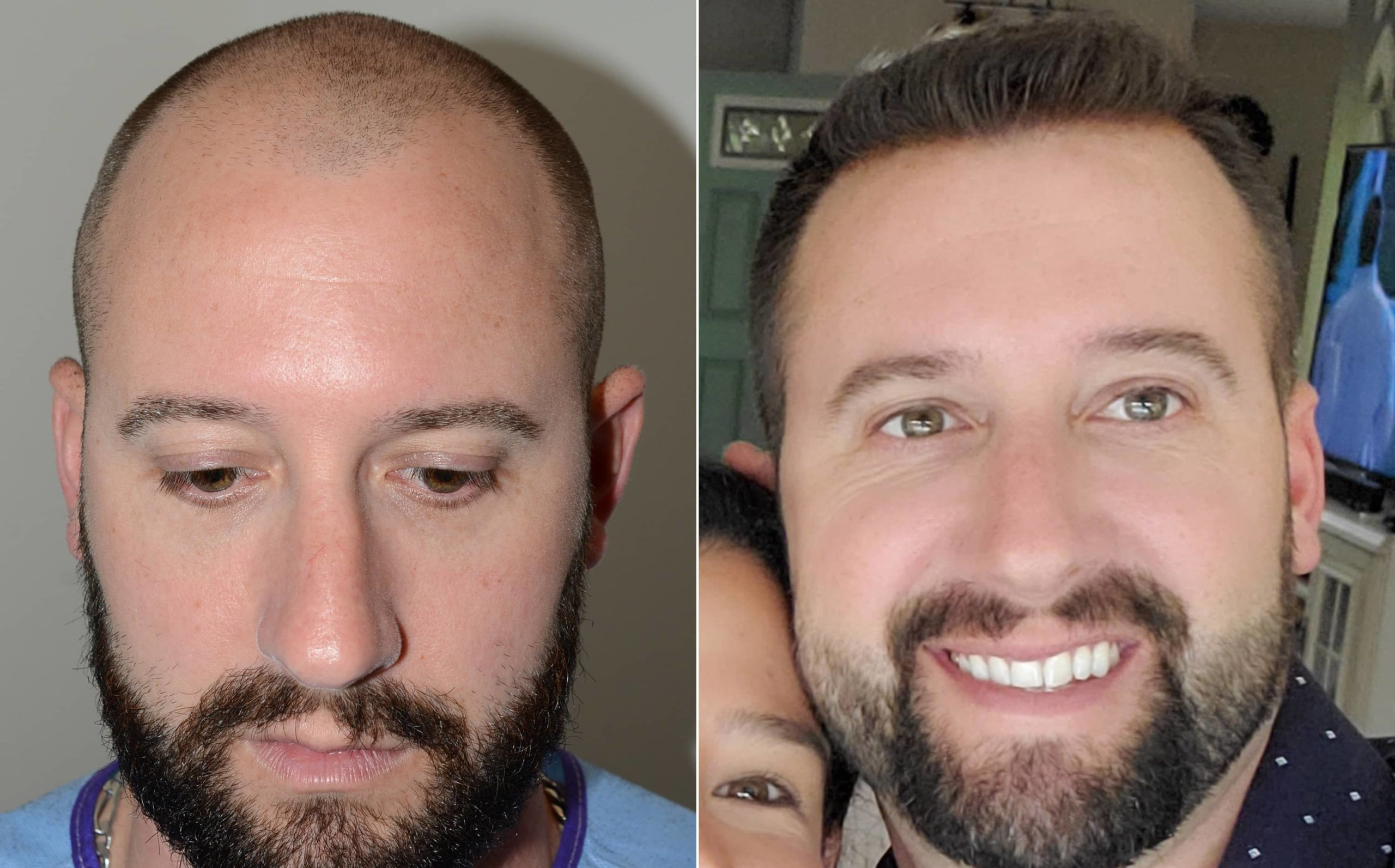
You have hair transplant questions, so we are providing
the answers....
to hundreds of questions we have received over the years.
Browse the site, categorized by question type and find the answers you
are looking for!
Hair Transplant - All Questions and Answers
QUESTION: What is hair loss caused by?
ANSWER: While there are several causes of hair loss, nearly 95% of all hair loss is caused by a condition known as androgenetic alopecia , commonly referred to in men as male pattern baldness. There are several factors which lead to the onset of this condition, including the following: 1) a genetic predisposition to hair loss; (2) the presence of dihydrotestosterone, a male hormone; and (3) age. On average, individuals typically lose some 100 hairs daily. These hairs should regrow several months later, and it is only until the hair loss exceeds the new hair growth that baldness results. Once hair loss starts, however, it is a progressive condition and will continue for a lifetime.
QUESTION: Do medications which are intended to control or defeat hair loss really work?
ANSWER: There are several medications which are FDA approved to treat androgenetic pattern hair loss, including Minoxidil (brand name Rogaine) which is a topical medication for both men and women that is applied twice a day, and Finasteride (Propecia), a pill intended for men only and taken once a day. While these medications can slow down and even stop altogether the progression of hair loss on the back of the head, their effectiveness is limited as less than two-thirds of all men actually obtain these results. Surgical hair restoration, or hair transplantation, is the only permanent solution for hair loss.
QUESTION: What is Androgenetic Alopecia?
ANSWER: Androgenetic Alopecia is the most common form of hair loss and is known more readily in men as male pattern baldness . It is a progressive disease which, once begun, worsens with age. There are several factors which lead to the onset of this condition, including genetics, age, and the presence of the male hormone dihydrotestosterone (DHT).
QUESTION: What is hair transplantation?
ANSWER: Hair transplantation is the surgical procedure which involves the removal of hairs from donor areas, commonly the back and sides of the head, which are then transplanted to other areas that are thinning or balding. Because the hairs removed from the donor area are not susceptible to baldness, they will continue to grow for a lifetime once transplanted. Follicular unit grafting is the most modern and state-of-the-art procedure for hair transplantation, and also the only procedure that Dr. Epstein performs. Hair naturally grows in groupings of one to three, and sometimes four, hairs which are called follicular units. Grafts are individually cut under the microscope, and as many as 2500 of these grafts can be transplanted during a single procedure, which typically lasts anywhere between three and six hours.
QUESTION: How painful is the procedure?
ANSWER: Virtually all our patients report that the hair restoration process involves very little, if any, discomfort. We are able to painlessly deliver anesthesia with a new computerized device known as The Wand@, and patients are also offered a pill to help them relax.
QUESTION: I'm very interested in hair transplantation, but concerned about the amount of pain. Just how much does the procedure hurt?
ANSWER: Virtually all our patients report that the hair restoration process involves very little, if any, discomfort. We are able to painlessly deliver anesthesia with a new computerized device known as The Wand@, and patients are also offered a pill to help them relax.
QUESTION: Are there solutions for those with very advanced degrees of baldness?
ANSWER: For men with advanced degrees of hair loss, the goal is typically to perform the maximum number of grafts that the donor site will permit. In general, this can range from 1,900 grafts to as many as 2,800. As soon as five months following the original procedure, patients will often undergo a second procedure to provide further coverage.
QUESTION: I am a 56 year old male with major hair loss, what I believe is a NW 5.5 or somewhere close. I have worn a hairpiece for the past ten years, have never had a transplant, and my hair loss seems to follow the same pattern of my father and older brothers. I am in excellent health, with wavy hair that is dark to medium brown and flecked with gray. I'd like to no longer rely on a hairpiece, and am hoping to find a solution that will provide sufficient coverage but also a mature' hairline. Do you have any suggestions for me that would keep in mind the age-appropriate results that I would like to achieve?
ANSWER: I've had several other patients in your situation, and basically we perform a procedure which concentrates on the front one-third to one-half of the scalp. The goal is to provide you with a natural-looking receding or mature hair line, along with sufficient density that will give the appearance of a nice head of hair on all but the view from the back of the head. Though the hairs can be spread out over a wider area, that will result in less density. For more density or wider coverage, a second procedure can be performed 6 or more months after the first procedure. For the second procedure, there is no hairline work and the concentration is on increasing the density and filling in at the crown. If you are concerned about the progression of hair loss in the crown, and given your relatively young age, I would recommend that you consider either minoxidil or Propecia.
QUESTION: I'm 26 years old and have been losing my hair for about a year and a half now. I've lost density throughout my scalp and in the crown area, and my hair line has receded, though only the hair line is noticeable when my hair is dry. Should I wait until my hair loss slow down or would surgery be an option for me now?
ANSWER: It really depends on how much your hair loss is bothering you. The right time for surgery is once it really starts to bother you. If that time is now, you certainly can have surgery, but should understand that, given your young age, completely filling in the crown area is not the best idea as you will likely continue to lose hair from there.
QUESTION: What is the minimum age a person should be to have a hair transplant?
ANSWER: Patients can range in age from 21 to 80, though since hair loss is not limited to a particular age range, hair transplantation really has no minimum age requirement. Regardless of age, the best thing to do is address your hair loss as soon as possible.
QUESTION: I'm not happy with my hair loss, but I'm only 21. I'm wondering if there's any way to determine how much more hair I will lose.
ANSWER: You can't really guess as to how much further hair loss will occur, though you can estimate, and not necessarily very accurately, your potential for future hair loss by looking at your relatives. Generally speaking, there is a greater chance of further hair loss progression the younger the age of onset.
QUESTION: Who makes a good candidate for hair restoration surgery?
ANSWER: Potential candidates for hair restoration surgery basically include an yone concerned about their hair loss and willing to undergo a minimally invasive procedure. Dr. Epstein has seen a wide range of patients who have been as young as in their late teens to as old as in their late 70's. They have had hair loss patterns ranging in severity from minimal hairline recession and early thinning, to advanced baldness where nothing but a rim of hair was left along the back and sides of the scalp.
QUESTION: Before surgery, do I have to cut the hair on the top of my head short or shave?
ANSWER: The hairs in the area of the transplant can be left as long as you wish, though cutting the hair short can often make our task a little easier.
QUESTION: I have several questions: is the whole head shaved during the procedure and are there any marks like cuts or anything else on the head immediately after the procedure? Also, how long would it take to complete 1,000 grafts? Could it be done all in one day?
ANSWER: In answer to your questions, I only shave those hairs from the back of the scalp that are to be transplanted. After the procedure, you can expect tiny crusts to form where the grafts were placed, which last for about one week, and you can view a photo of this on my website. While most patients require more than 1,000 grafts to achieve any degree of density while maintaining a completely natural results, it would take about 3 hours to complete a 1,000 graft procedure.
QUESTION: To minimize the risk of scarring, is there anything that can be done before surgery?
ANSWER: There is little that can be done before surgery to reduce scarring. Scarring is best minimized with the use of proper techniques like microscopic dissection.
QUESTION: Is it possible to transplant hair to the chest, and if so where does the hair come from and what kind of upkeep is required?
ANSWER: I have a number of happy patients whom I've performed chest transplants on with very good results. The hairs come from the back of the head, meaning that they will continue to grow. Most of my patients have found that about once or twice a month they need to trim the hairs.
QUESTION: Can hair be taken from your armpit for a hair transplant?
ANSWER: Because armpit hair has a different glandular makeup, it cannot be used for hair transplantation.
QUESTION: Can good hair be cloned and used for surgery in order to save the donor hair?
ANSWER: Cloning hair is not an option today, though perhaps it will be in the future. With the proper procedure, you need not worry about wasting your donor hair at the expense of achieving great results.
QUESTION: Would planting of substitutes of hair be a preferable operation to the transplantation of one's own hair from donor zones?
ANSWER: The transplantation of synthetic hair is not available right now, but a perfectly natural appearance can be achieved through hair transplantation using the hairs from the scalp.
QUESTION: I have a friend willing to donate his follicular units. Can this be done or do you have to use your own hair?
ANSWER: Only an individual's own hair can be used for transplantation.
QUESTION: Does the consultation have to be done at your office or is there some other way?
ANSWER: We've had many patients send us some photos of themselves, and then I or Roxy will speak with them by phone to discuss what I would recommend. This will allow you to get everything done with one trip and return home the very next day. In addition, we're hoping in the near future to offer online consultations.
QUESTION: Because I'm African-American, is there anything specific about hair transplantation that I need to know?
ANSWER: We have achieved excellent results for many African American patients. There are certain techniques which need to be used when preparing and transplanting the grafts since the hair can be so curly. We also perform additional testing to check for the possibility of keloidal scarring, though fortunately keloid scarring rarely occurs, even in those with a history of forming them, when the proper surgical technique is used.
QUESTION: Will an eyebrow restoration procedure work for someone with absolutely no hair on their eyebrows?
ANSWER: For someone with no eyebrow hair, a single procedure can provide enough volume to make the eyebrows appear thin but natural appearing. Unless this thin appearance is sufficient, most patients find that they need to continue to pencil in their eyebrows in order to complete the look. In order to provide more density, a second and even a third procedure can be performed in the future.
QUESTION: How successful are eyebrow transplants and are there any downsides?
ANSWER: Eyebrow transplantation can successfully achieve an increase in both density and coverage, typically with a single procedure in which you're able to return home the same or next day. The only downside to the procedure is the need to trim the hairs once or twice per month.
QUESTION: I'm wondering how many grafts an eyebrow transplant requires and what the pricing is in comparison to hair transplants?
ANSWER: In general, 60 to 75 single and occasionally double haired grafts are required to restore density to the eyebrows. The procedure is a very demanding one, essentially requiring the perfect placement of every single graft. The fees for an eyebrow transplant are higher per graft than if a large number of grafts were being performed, however the overall total fee is much lower than that of a hair transplant because fewer grafts are being placed.
QUESTION: On my eyebrows, hair is not growing from the nose area to the middle of my eyebrow, though from the mid point of my brow toward my hairline I do have hair growing. I consulted with a doctor who said the he only performs implants of 20 hairs on each side, which didn't make much sense to me. If I'm looking to have as many as possible implanted at once, what would you suggest?
ANSWER: You could achieve a significant improvement to the appearance of your eyebrows with 75 or so one-hair grafts transplanted to each brow, though you may need to still fill them in with a makeup pencil or have them permanently tattooed. However, the transplanted hairs will be able to minimize the painted-on appearance and provide substance to the eyebrows.
QUESTION: Following a beard transplant, when are you first able to shave?
ANSWER: I typically advise my patients to hold off on shaving for the first 10 days after the procedure, though I have had some patients who carefully trimmed the hairs without any adverse effects after one week. During these first ten days, the transplanted hairs tend to look like stubbies .
QUESTION: I'm interested in moustache and beard transplants, but concerned about the scars and wondering how bad they are.
ANSWER: I have performed a number of facial transplants and can tell you that you need not worry about scarring. By transplanting follicular unit grafts, the cheek, chin and temple skin will grow hairs without noticeable bumps. This hair can be trimmed and even shaved. The only scar that results is the one on the donor area on the back of the head, and this is a single fine-line scar that is imperceptible even with a haircut using a number 2 razor.
QUESTION: Most of my facial hair is either directly on my chin or just under it, and really I've never had full facial hair and I have no sideburn growth. Any hair growth that I have above my lip/moustache region does not go down to my lip and has gaps. Even if I did grow a chin beard, there would be no growth to connect the chin and moustache areas. The hair on my head is full and healthy, in fact it grows very quickly and I have to get it cut every 14 to 18 days. I would like to grow a moustache, goatee, possibly sideburns, and ultimately a full beard though I'm not sure I'll ever be able to. I'm wondering if I can expect thick growth in the facial area and how long I'd have to allow the little facial hair that I do have to grow before the procedure.
ANSWER: Nice, thick growth in the facial hair is very realistic with good donor hair. To allow me to see where you need hair, I would suggest that you let the facial hair grow for 4 to 5 days before surgery, even a week, given your slower growth rate, if you think that would be possible.
QUESTION: Are you able to thicken a moustache and beard and how do you do it?
ANSWER: I have performed a number of successful mustache hair transplants on patients like yourself who are seeking more density and perhaps a wider area of coverage. Depending upon the amount of additional hair desired, the results can usually be achieved in a single procedure involving anywhere from 100 to as many as 1900 or more grafts. Transplanted from the scalp, these hairs will grow just like regular beard hair and need to be trimmed and/or shaved.
QUESTION: I've read that for facial hair transplants the hair will first fall out before normal growth starts in the new site. Is this true and what's the recuperation process for facial hair transplants?
ANSWER: Following a facial hair transplant procedure, you can expect tiny crusts to form and last for about a week where each graft of one and two hairs was placed. Once the crusts fade, you will have another week or two with the little hairs. The transplanted hair does fall out, 70% or so of it by about week three, and this leaves the transplanted areas looking virtually undetectable. The 30% of transplanted hairs stick around and continue to grow. Regrowth will begin about one to three months later.
QUESTION: I've been interested in getting a hair transplant and doing some research. However, I'm a little confused by which is the better of two different options I've found for removing the hair. One is with a scalpel and the other is with a tool that doesn't leave a scar. The scarless one would seem to be the best, but I've found that there seem to be some drawbacks too, mainly that more of the new hairs die and that you can't put in as much in each session. Can you tell me if this is true and explain the difference between them?
ANSWER: First, I'd like to commend you on your research. I believe you're talking about the FUE ( scarless ) procedure versus the state of the art FUG procedure in which a single incision is made. While I perform both procedures, I do feel that the FUE procedure is overhyped and inferior in the majority of cases. The main reasons for this are as follows: (1) FUE cannot be used in many patients with certain color hair, curly hair, or fine hair; (2) there is an increased risk of surrounding hair loss that limits the total number of grafts that can be harvested; (3) there is a limited number of grafts that can be harvested for each procedure; and (4) the cost is significantly higher. I have been performing the FUG procedure nearly exclusively for the past five years because it provides outstanding results. Further, the donor site is virtually undetectable in the majority of patients when closed in a plastic surgery fashion, which you can see for yourself by viewing photographs of hair transplant scars here.
QUESTION: In one procedure, how many grafts can be provided?
ANSWER: In a single procedure, we can perform as many as 3000 grafts, depending of course upon the quality of the donor hair. However, 2200 or so grafts is more common as most patients neither require nor desire more.
QUESTION: I've read about a special lateral slit technique which is supposed to provide more density, and would love your opinion on that and if you provide it.
ANSWER: The lateral slit technique , also known as coronal angle grafting, basically involves the planting of grafts in the coronal (side to side) versus sagittal (front to back) plane. The concept is basically to rotate the blade's angle from a more sagittal to a more coronal position when making recipient sites. I've been using this technique for over five years, though I actually believe that the most natural appearance coupled with the greatest density is best achieved through a combination of the two.
QUESTION: I'm wondering about two things: 1. How many hairs are there in one micrograft and what is the size of it? 2. Could you confirm your charges for 1,500 micrografts and 1,800 micrografts.
ANSWER: The grafts that we use follow the technique of follicular unit micrografting and are all dissected under the microscope to one to four hairs. To achieve the greatest increase in density, which is often required in women, it is necessary to use the slightly larger grafts. You can view my prices at this location on my website.
QUESTION: I have several questions: is the whole head shaved during the procedure and are there any marks like cuts or anything else on the head immediately after the procedure? Also, how long would it take to complete 1,000 grafts? Could it be done all in one day?
ANSWER: In answer to your questions, I only shave those hairs from the back of the scalp that are to be transplanted. After the procedure, you can expect tiny crusts to form where the grafts were placed, which last for about one week, and you can view a photo of this on my website. While most patients require more than 1,000 grafts to achieve any degree of density while maintaining a completely natural results, it would take about 3 hours to complete a 1,000 graft procedure.
QUESTION: I'd like to know if the results are actually permanent because I've heard that they can look good initially but then not look so great later on.
ANSWER: The results of hair transplantation really are permanent. The hair will grow and continue to do so for the rest of your life because the hair transplanted from the donor area is not sensitive to the balding process.
QUESTION: Can you tell me about detectability and scarring after a hair transplant?
ANSWER: In my opinion, a hair transplant wasn't performed properly if you can tell that an individual had the procedure. A completely natural looking head of hair, one in which the hairline is so natural that the hair can be brushed back and even cut very short, is completely attainable using state-of-the-art techniques. There is also a bit of artistic license here as the natural appearance is achieved by using the right combination of different sized follicular unit micro grafts transplanted at the proper angle, and by designing a hairline that is in harmony with the individual's facial proportions. Follicular unit transplantation is a technically demanding procedure, but by far creates, for most individuals, the most natural appearing results.
QUESTION: How long does it take for transplanted hair to grow and what's the growth rate?
ANSWER: Once the transplanted hairs begin to grow, they will continue to do so for a lifetime. The growth process typically starts about 3 months after the procedure, while final coverage is evident within 8 to 12 months after the procedure.
QUESTION: About 2 months ago, I had a 3000 fu ht done and have had some problems. Because I'm in the military, not having a scar is important to me, but my scar is very wide, 5-8mm now, and I seem to have a large area of shock-loss around, though mostly below, the scar. So, I'm wondering, first, do you do revisions and have you had success with them? And also, have you seen shock-loss like this before and does it grow back?
ANSWER: I do perform scar repairs, regularly and with great success. Feel free to follow up with me if you feel that this is necessary, however I would first recommend that you give your current situation a little more time. You'll need at least 6 months to assess the results of the donor site.
QUESTION: The photos on your website show some great results, but I was wondering how long it takes to get those results.
ANSWER: You can expect the final density to be apparent around 8 to 12 months after the procedure. The hair starts to grow at 2 months, with noticeable results by month 3, and by month 6 the hair will really start to look full.
QUESTION: I've seen men who've had hair transplants and the back sometimes looks patchy. If you harvest the donor area, does the hair on the back of the head then look thinned out?
ANSWER: Patchy or thin hair along the donor area is only a concern if there is significant scarring with a single wide scar or multiple horizontal scars, or if 40% or more of the donor hair has been extracted. As long as this is avoided, you can expect results that are both undectable and look great.
QUESTION: Is there any guarantee that the transplanted follicles will grow hair?
ANSWER: I generally tell my patients that they can expect 90-plus % of all transplanted hair to grow, with the exception of procedures performed in an area of scar tissue (e.g. after surgery to remove skin cancer). In those cases, it is more common for about 70% of the hairs to grow, though in order to achieve maximum coverage I do compensate by using grafts that have 2 hairs instead of 1.
QUESTION: About a year and a half ago I started taking propecia with very good results. I wasn't really considering a hair transplant until I came across your website! Though I have noticed that the hair in my mid scalp has continued to get thicker, I would be interested in getting approximately 500 graphs in and around my mid scalp. I'd be interested in hearing your opinion and how many graphs you would recommend. I'm also wondering if there is any chance that the graphs applied to my midscalp could damage my hair that's already there and stop the hair from growing. Thanks.
ANSWER: There is a risk of damaging already existing hairs by placing grafts into an area that already has hair. However, the risk is minimal when the microscopic technique is used. I typically tell my patients that they can expect no more than 5% to 10% of temporary thinning in the area, allowing for that area to look significantly thicker once the newly transplanted hairs have grown in.
QUESTION: What do you think is better: laser hair transplants or strip excursion and follicular unit micrografting?
ANSWER: Because the laser can cause significant skin damage, few if any leading hair transplant surgeons perform laser hair transplants. The laser seems to make a far better marketing tool than it does surgical tool, thus I would answer your question by saying that microscopic follicular unit grafting is not only better, but the state of the art procedure today, and also the only procedure that I perform.
QUESTION: Do medications which are intended to control or defeat hair loss really work?
ANSWER: There are several medications which are FDA approved to treat androgenetic pattern hair loss, including Minoxidil (brand name Rogaine) which is a topical medication for both men and women that is applied twice a day, and Finasteride (Propecia), a pill intended for men only and taken once a day. While these medications can slow down and even stop altogether the progression of hair loss on the back of the head, their effectiveness is limited as less than two-thirds of all men actually obtain these results. Surgical hair restoration, or hair transplantation, is the only permanent solution for hair loss.
QUESTION: I live in Paris ( France ), and had a hair transplant here last year. There are still some empty areas and I'm wondering if it would be possible to have another procedure to fill in those areas. My once concern is whether or not a new procedure would require me to have my hair cut.
ANSWER: I have a number of patients who travel to Miami from all over the country and the world for their procedure. In answer to your question, I am able to achieve a significant increase in density and to fill in patchy areas with the technique of follicular unit grafting. In addition, cutting your hair would not be necessary, and in fact would provide extra coverage to the transplanted areas during the first week when crusts form. If you have any further questions, please feel free to follow up.
QUESTION: Can you perform multiple procedures at the same time? I'm interested in having chin augmentation along with hair transplantation.
ANSWER: Though I specialize in hair transplantation, I am a board certified facial plastic surgeon and I do perform other facial plastic surgery procedure. The two procedures can be performed at the same time. Chin augmentation is generally performed under intravenous twilight anesthesia, meaning that you won't remember anything, and this does allow for the hair transplant procedure to be performed as well.
QUESTION: I'm wondering if it's possible to reverse a hair transplant and if it can look natural, or will the scars look obviously like a reversed hair transplant? I recently had a hair transplant, and I realize there will always be scarring, though the scalp sites look pretty minimal right now. One doctor told me that if I allowed the baldness to progress then used electrolysis to kill the transplanted hair that this would kill the follicle and the transplanted hair would heal over with skin bumps.
ANSWER: A hair transplant can be reversed in a variety of ways, including the surgical extraction of each individual graft, laser hair removal, and wide excision of a group of grafts. Once the grafts are removed, I often recommend laser smoothing of the skin. This will often get rid of the bumps and provide the best results. Feel free to send me photos, and I will let you know what I think once I've reviewed them.
QUESTION: How many sessions does a hair transplant typically require?
ANSWER: Most hair transplants average between one and three sessions, though the number will depend upon the density of existing hair present in the balding area and the density desired. Further sessions can be required for some patients.
QUESTION: Sorry about the long post, but I'm wondering if correcting a previous hair transplant surgery is possible. Between 1992 and 1996, I had five previous procedures which reconstructed the frontal area only. The area runs all the way around the hair line at about 1 inch in depth, maybe a little deeper along the temples. Mini and micro grafts were used, taken using the punch graft method, and the remaining holes were sutured up. I would like to have the old surgery fixed to give a more natural appearance, I've included pictures so that you can see what I'm talking about. I'm 36 years old, and have been using finesteride and rogain for many years which I think has worked so that I haven't lost any more hair. The areas where the grafts were taken from, three total, left the donor areas bumpy, some spots worse than others, which I'd like to have fixed or at least reduced. There is also an elevation of the tissue which received the grafts which I can feel and believe must be scar tissue under the skin, which I would not want to get worse with corrective surgery. I'm also concerned that if the previous plugs were removed there would be an added bumpiness in this area. Could you please tell me what can be done to fix this older surgery and what methods you might use, also an estimate of how many sessions it would take and what the cost might be? My main goal is to achieve a natural looking and feeling hairline, avoiding further scarring and bumpiness in the frontal area, and reducing the current bumpiness I have from my previous donor sites. I'm also wondering if the existing plug grafts can be redistributed, using FUE or FIT as some refer to it to remove individual hairs from them. Thank you.
ANSWER: There are several issues which seem to have resulted in the unnatural appearance that you have, all of which I believe can be addressed and improved upon. First, without the fine one hair grafts placed in an irregular fashion up front, your hairline appears too much like a straight line. The larger plug grafts that were used have created lumpy bumps or cobblestoning . Second, right behind the frontal one inch or so of the hairline, there is not enough density. This has left the scalp thinner, adding to that transplanted look. The last issue is the scarring of the donor site. Given this scarring, I would not recommend the FUE procedure for you, which uses grafts extracted one by one using tiny punches. There are several reasons why I would not recommend this procedure for you, including the limit on the number of grafts possible per procedure, the likely accidental transection of donor hairs, and more importantly the fact that the FUE procedure will only add, not subtract, from the donor site scarring. I believe that the best approach for you would involve the removal of donor grafts by a single donor strip. This would incorporate some of your prior scarring as portions of bumpy, scarred scalp would be removed and replaced with a single fine line closure similar to the results that I achieve using my state of the art follicular unit grafting procedures. Ultimately, I believe this would significantly lessen that transplanted appearance and greatly improve your appearance. Please feel free to call or email with any further questions.
QUESTION: I'm interested in having a second hair transplant procedure. For this, is a new area harvested, thus creating a new scar, or is the incision made over the existing scar?
ANSWER: For second procedures, I believe in keeping a single donor site scar. Thus, I always remove the original donor site scar and include it within the second procedure's new strip.
QUESTION: I'm thinking that I will need a lot of grafts, so probably more than one procedure will be needed, but how long between procedures are you supposed to wait?
ANSWER: In order to assess the results of the first procedure, I typically advise my patients to wait a minimum of 4 months before undergoing a second procedure. With a megasesson , which involves as many as 2600 follicular unit grafts in a single procedure, many of my patients are surprisingly satisfied with the results. However, in order to determine the best approach for you, I would need to evaluate your degree of hair loss as well as your expectations.
QUESTION: I've heard you often suggest two procedures, so I'm wondering if that means that little improvement would be seen after only one procedure? Or can further hair loss be expected after the procedure, and how much improvement can realistically be expected with only one treatment?
ANSWER: Significant and noticeable results are typically attainable with just one procedure, though it is my opinion that, in the future, if one's existing hair loss is significant, a second procedure is usually desired. A second procedure can further fill in those areas of progressive hair loss and achieve more density overall.
QUESTION: I'm having surgery in a few months to remove a couple of sebaceous cysts from my scalp which are about 1 cm each. I'm told that a visible scar in which hair will no longer grow can very possibly result from the procedure. Since I prefer to keep my hair short, I'm wondering if hair restoration could be used like a spot treatment to fill in the small scars.
ANSWER: In answer to your question: yes. Hair transplant can be used to repair scars if your surgery leaves you with them.
QUESTION: I'm interested in moustache and beard transplants, but concerned about the scars and wondering how bad they are.
ANSWER: I have performed a number of facial transplants and can tell you that you need not worry about scarring. By transplanting follicular unit grafts, the cheek, chin and temple skin will grow hairs without noticeable bumps. This hair can be trimmed and even shaved. The only scar that results is the one on the donor area on the back of the head, and this is a single fine-line scar that is imperceptible even with a haircut using a number 2 razor.
QUESTION: To minimize the risk of scarring, is there anything that can be done before surgery?
ANSWER: There is little that can be done before surgery to reduce scarring. Scarring is best minimized with the use of proper techniques like microscopic dissection.
QUESTION: After the procedure, do you have scars directly where the new grafts have been put in?
ANSWER: There is virtually no scar where the new hairs are put in when the advanced technique of follicular unit grafting is used.
QUESTION: I'm interested in having a second hair transplant procedure. For this, is a new area harvested, thus creating a new scar, or is the incision made over the existing scar?
ANSWER: For second procedures, I believe in keeping a single donor site scar. Thus, I always remove the original donor site scar and include it within the second procedure's new strip.
QUESTION: I'm curious about what happens to the scar as I get older. Over time, will it become more visible? Does the skin stretch?
ANSWER: In general, it takes around 8 to 10 months for scars to reach their maturity, or their final appearance. For most patients, the scar will slowly continue to improve in appearance over the span of several more years, and it will not stretch with time. The only way for it to become more visible is if a patient experiences significant thinning of the hair in the future, which does not cause the scar to stretch but simply to be more visible. In such cases, a followup procedure can be performed.
QUESTION: What is the pricing required for an eyebrow transplant, particularly in comparison to a hair transplant?
ANSWER: The eyebrow transplant procedure is a very demanding one, essentially requiring the perfect placement of every single graft. The fees for an eyebrow transplant are higher per graft than if a large number of grafts were being performed, however the overall total fee is much lower than that of a hair transplant because fewer grafts are being placed.
QUESTION: How are your fees in comparison to other doctors?
ANSWER: I've been specializing in surgical hair restoration for over 10 years now. I've been able to perform two surgeries a day, focusing on each one, one at a time, and performing all of the transplants myself rather than having a technician do so. I am fortunate to have very happy patients who speak for my work and allow me to stay busy without the need for advertising. Because of this, I'm able to keep my fees competitive.
QUESTION: I'm wondering about two things: 1. How many hairs are there in one micrograft and what is the size of it? 2. Could you confirm your charges for 1,500 micrografts and 1,800 micrografts.
ANSWER: The grafts that we use follow the technique of follicular unit micrografting and are all dissected under the microscope to one to four hairs. To achieve the greatest increase in density, which is often required in women, it is necessary to use the slightly larger grafts. You can view my prices at this location on my website.
QUESTION: I am a blonde and wondering if the procedure can be good for me, or if having blonde hair has any special concerns.
ANSWER: The most undetectable results actually tend to occur in blondes, though there also tends to be a little less density achieved than with individuals with darker hair. You get a good idea of the results you're likely to achieve by viewing the pictures on my website that involve some of my blonde patients. Also, if you have any further questions, feel free to call or email with them.
QUESTION: I'd like to know how your hair transplants are different from other because, though I'm interested in getting one, I'm a little hesitant because I really hate the way some of the ones I see look.
ANSWER: To achieve the best results, creating a good hair line is very important. You can view examples of aesthetically pleasing hairlines on this page on my website : Close up photos of hairlines . I also believe that having experience with facial plastic surgery and utilizing small 1 and 2 hair grafts are extremely helpful as well.
QUESTION: I have Hereditary Angioedema, for which I take 2mg of Winstrol three times a day and 25 to 50mg of Doxepin in the evenings. I have prednisone at home which I can take to prevent a full-fledged episode in case I have one or feel one coming on. I haven't had a major episode (abdominal) for more than two years. Also, I've never had swelling in the throat/larynx area. I'm interested in having a hair transplant. Prophylactically, I could take prednisone for a week or two prior to my procedure, maybe 5mg twice a week. I do this each spring because I used to have a major episode each spring which I've been able to prevent for the past two years by taking prednisone for a couple of months. Can you tell me if any of this would be a problem if I were to get a hair transplant? Thank you.
ANSWER: Because my background training included Otolaryngology (ear, nose and throat), I am very familiar with Angioedema. In order to reduce swelling, we routinely administer Prednisone to all our patients at the time of surgery. This should be sufficient prevention for you and, as long as you take your regular medications, I don't foresee your having any problems.
QUESTION: I'm interested in getting a hair transplant, but because I'm a diabetic, I would like to know if the procedure would adversely affect my health in any way.
ANSWER: There should be no adverse affect on your health. Many of my past patients have had both insulin and non-insulin dependent diabetes, and the only difference was that they tended to have a slower rate of hair regrowth, typically four months as opposed to three.
QUESTION: I take 5mg of Enalapril once a day to control my high blood pressure. Are there any concerns about people with high blood pressure having hair transplants?
ANSWER: I wouldn't foresee any problems, particularly since you are already treating your high blood pressure. I've performed procedures on many patients with high blood pressure without any adverse effects.
QUESTION: Hi, I'd like to know if there's anything you can do about a forehead that's too high.
ANSWER: Several procedures can effectively reduce the high forehead. Hair transplantation is one of these procedures and, when performed properly, can yield quite natural appearing results. A procedure which I call the hairline advancement procedure, essentially the opposite of a browlift, is yet another option.
QUESTION: I don't think that I'd need many grafts because my hairline's not too high, I'm talking about a max. of only 1cm, and my hair is very thick all over naturally. Anyway, I'm wondering what happens to the donor area and if there's a bald patch there and for how long. And is it true that the hair in the area that's being treated all falls out and then grows back? And does the hair then grow back at the same rate as hair on other areas of the head or is the growth stunted because of trauma?
ANSWER: Needing to do fewer grafts, that's always good news. Regarding the donor area, it gets sutured closed which will leave a fine line scar. You can view examples of these on my website. As for the area being treated, very few of your own original hairs fall out after the procedure. The hairs that have been transplanted will have little crusts for about one week before falling out two weeks later and ultimately regrowing within 2 to 3 months later. Because the hair loss involves only those hairs which have been transplanted and not your original hair, during the period before regrowth you will look just like you did before the procedure and can wear you hair however you desire.
QUESTION: Do medications which are intended to control or defeat hair loss really work?
ANSWER: There are several medications which are FDA approved to treat androgenetic pattern hair loss, including Minoxidil (brand name Rogaine) which is a topical medication for both men and women that is applied twice a day, and Finasteride (Propecia), a pill intended for men only and taken once a day. While these medications can slow down and even stop altogether the progression of hair loss on the back of the head, their effectiveness is limited as less than two-thirds of all men actually obtain these results. Surgical hair restoration, or hair transplantation, is the only permanent solution for hair loss.
QUESTION: I'm very interested in getting a hair transplant, but before I get my hopes up, there was one things that I wanted to know. I have a friend who once made a remark about my tight scalp' and I've always wondered about it. Have you ever, or is it possible, for someone to be turned down from getting a transplant because their scalp is too tight?
ANSWER: This is by no mean an absolute contraindication for surgery. Some people simply have a tighter scalp than others, which may restrict or limit the number of grafts that are able to be obtained in a procedure.
QUESTION: I can't stop pulling my hair out and I've been doing it so long that it won't grow back anymore. Is there anything that I can do?
ANSWER: It sounds like you have trichotillomania, and I would suggest that you learn more about it, which you can do by visiting a few websites. I have treated quite a few patients who have had trichotillomania. Most of my patients have been women who have found that after years of pulling their hair, most commonly of the scalp, they required a hair transplant to replace these hairs. I have also performed a number of eyebrow transplants. In fact, I have two of these procedures scheduled this month.
QUESTION: Is hair transplantation covered by insurance?
ANSWER: Insurance typically will not cover elective procedures like hair transplantation.
QUESTION: I'm interested in getting a hair transplant but I currently wear a hair piece and am wondering how to ensure that the transition won't be too noticeable. Would a concealer work?
ANSWER: You can wear concealer; in fact, we give it to all our patients and it is called Toppik. Typically you would not wear the hairpiece for the first four days. After that, you could begin to wear it lightly secured to the scalp and do so for the next 3 weeks, after which you can then wear it regularly. Keep in mind, however, that the hairs will grow back faster, and possibly in greater total amounts, given the less time that the hairpiece is spent on. One suggestion that I would have to make the best transition would be to get the hair piece cut thinner and thinner, then go away for a week and return with a goatee. Believe it or not, most people likely won't realize the difference. You can also read what a patient of mine who whore a hairpiece had to say here.
QUESTION: How short can I wear my hair after a transplant without it showing too much?
ANSWER: Patients are typically able to cut their hair with a number 2 razor after the procedure.
QUESTION: Can you tell me how long the surgery is and what the post treatment period is?
ANSWER: Hair transplant procedures take between four and six hours to perform, and the post-operative period is not a difficult one. You can typically expect to resume your normal activities the very next day, and the sutures are removed within eight to ten days following the procedure. It's possible for you to remove the sutures yourself, particularly if you're traveling for your procedure, and in fact we provide our patients with a disposable kit that they can use. Otherwise, you can go to your local physician or nurse.
QUESTION: For men who receive facial hair transplants, what is the recuperation process? And do the hairs all fall out before regrowing?
ANSWER: Facial hair transplants involve a similar recuperation process to the usual hair transplant. Tiny crusts will occur where each graft of one and 2 hairs were placed and will last for out one week. For another week or two after that, you will have the little hairs but without the crusts. By the third week, the transplanted hair will fall out, about 70% or so while the remaining 30% stick around and continue to grow. At this point, the transplanted areas will look nearly undetectable until, one to three months later, the hair begin to regrow.
QUESTION: How long after the procedure until you get back to your usual routine?
ANSWER: Within one to three days, patients are typically able to return to work and most of their social activities. All activities, including most exercise and regular hair care, can be resumed within four to six days. During the first week, a powder called Toppik can be applied to the scalp to help conceal the tiny crusts which develop around each graft.
QUESTION: I'm not in Miami so I'm wondering how long I'd have to stay at the clinic after the operation.
ANSWER: If you're not looking to spend a lot of time in Miami , you can fly home the very next day.
QUESTION: What do you think specifically makes you a good surgeon and what do you think people should look for in a surgeon?
ANSWER: First, when looking for a surgeon it's very important to find a qualified and experienced surgeon, specifically with hair transplantation. You'll also want to look for one who is familiar with and utilizes the most advanced techniques for hair transplantation. I have chosen to focus solely on hair transplantation, though I also believe that my expertise with facial plastic surgery if very helpful as well. My unique area of expertise among hair replacement physicians as a facial plastic surgeon provides me with an invaluable aesthetic background.
QUESTION: Do you solely perform the surgeries at your clinic or do you have an assistant who performs them?
ANSWER: Being my private practice, I am the only physician in residence and I personally perform each and every procedure.
QUESTION: Are there any risks associated with the procedure?
ANSWER: The risks associated with hair transplantation are typically very rare and minimal. Patients will occasionally get a few pimples that clear up soon afterward, or on occasion may experience a little numbness of the scalp which clears up within six weeks.
QUESTION: Other than wearing a wig or the like, what can be done if a procedure fails or goes wrong?
ANSWER: While any type of surgery does carry with it some risk of complications, I have personally noted a very low risk of complications after performing 2 cases every day since 1993.
QUESTION: Is it possible to do things and be active after surgery or do you have to wear a hat?
ANSWER: It's certainly possible to enjoy yourself without a hat after surgery. We recommend that our patients use Toppik on the transplanted areas for coverage, and have had quite a bit of success with it. One of our patients said that the time after the procedure was nothing like he'd expected: In fact, I went to dinner with my friends the night of the procedure. This was pretty nerve-racking since I didn't want anyone to know I had gotten hair transplants, and I wasn't sure about it, but after putting on the Toppik Dr. Epstein gave me, it was pretty much impossible to tell. I spent a week after the procedure in Coconut Grove and had a great time."
QUESTION: Since I'd have to travel for the procedure, would it be possible to plan a vacation or time off with my family at the same time?
ANSWER: A vacation is certainly a possibility. I typically advise that you allocate one full day to the procedure itself along with rest afterward. On the first day your hair will be washed and you won't have to return to the office, while by the second day you will be able to enjoy some time with your family though your head maybe slightly to somewhat tender. Most activities are permitted the very next day, though we recommend, particularly here in south Florida , that you take some precautions to cover or keep your head our of the sun. Several of our patients have enjoyed mini-vacations following their procedure, including one who commented: Only the first day was a little hectic. After that, everything was back to usual. Since I was always wearing a hat before the surgery anyway, wearing a hat wasn't even a big deal."
QUESTION: Is there any negative impact that can happen from flying after the surgery?
ANSWER: No, there are no negative impacts that can result from flying after the procedure.
QUESTION: Is there any follow-up care that's needed and make it more difficult if you're coming from far away?
ANSWER: We don't believe that there is any disadvantage or that post procedure follow-up is less effective when the patient is outside of south Florida . We provide each of our patients with a suture removal kit which can easily be used by family members, friends, or even your local doctor. After that, out-of-state patients take the same steps as those of local patients.
QUESTION: Are transplants a whole lot better than they used to be and does that make traveling easier?
ANSWER: Since 1993, new techniques have dramatically improved the hair transplant and the results. This involves travel to some degree as these improvements have allowed the procedure to be more akin to a dentist's visit than it is to major surgery, thus making traveling afterward fine. I have quite a few patients from the NY/NJ/Pennsylvania region who were able to fly home the very next day after surgery.
QUESTION: If I'm traveling for the procedure, is it necessary to bring someone with me?
ANSWER: While not necessary, it is always nice to have someone accompany you. Our office is happy to arrange travel for you to a hotel in the area, and there are, in fact, several hotels within five minutes of the office.
QUESTION: Are there special arrangements or requirements as I'm traveling to Miami for my procedure?
ANSWER: Some 30 percent of Dr. Epstein's patients travel to south Florida from out of town for their procedure. As far as procedures go, the hair transplant is ideally suited to be performed on a fly-in/fly-out basis. Though a patient can fly home the very same day, we recommend an overnight stay in a local hotel after the procedure. On the first day, the hair is washed in the office, and gentle hair care can be resumed by the third day. After ten days, the sutures will need to be removed, which can be done by a family member, friend or even a local physician with a suture removal kit that we provide you with. Our staff will be happy to help with your travel arrangements.
QUESTION: Since I'd be traveling to you from the New York area, I'd like to know what the issues are compared to having a local procedure and how the costs compare.
ANSWER: I have performed many procedures on patients who, like yourself, have flown in from out of town, and we could certainly arrange for you to speak with or even meet with any of my previous patients from the NY area. As for costs, we offer a travel discount which allows our fees to be lower than the comparable finest surgeons in NY. In addition, the quality of our work speaks for itself.
QUESTION: I'm not in Miami so I'm wondering how long I'd have to stay at the clinic after the operation.
ANSWER: If you're not looking to spend a lot of time in Miami , you can fly home the very next day.
QUESTION: What does it mean that your website says you can view a procedure?
ANSWER: You can view a procedure by coming into the office and watching as a patient undergoes a procedure.
QUESTION: I'm a woman, 34 years old, and very depressed about my hair loss, which is in the immediate front like it's going to form a bald triangle above my forehead. It also seems to be thinning a lot along the side/front of my head, basically sideburn and the area above. I don't have any medical problems, no family history, no clue, and have had all bloodwork done. I'm wondering if a transplant is a possibility for me and how long I should wait. Also, I just read a very informative article online that you wrote about women's hair transplantation, but there weren't any pictures. So I'd also like to know is there anywhere that I can see photos of hair transplants on women? Thank you.
ANSWER: From your description, you sound like a very suitable candidate for hair transplantation. Typically, when hair loss is bothering you enough that you want to do something about it, that would be the right time to undergo the procedure. The following links have helpful information and photographs involving women's hair transplant procedures: Women's hair transplant procedure -- Female patient photo gallery
QUESTION: I don't think that I'd need many grafts because my hairline's not too high, I'm talking about a max. of only 1cm, and my hair is very thick all over naturally. Anyway, I'm wondering what happens to the donor area and if there's a bald patch there and for how long. And is it true that the hair in the area that's being treated all falls out and then grows back? And does the hair then grow back at the same rate as hair on other areas of the head or is the growth stunted because of trauma?
ANSWER: Needing to do fewer grafts, that's always good news. Regarding the donor area, it gets sutured closed which will leave a fine line scar. You can view examples of these on my website. As for the area being treated, very few of your own original hairs fall out after the procedure. The hairs that have been transplanted will have little crusts for about one week before falling out two weeks later and ultimately regrowing within 2 to 3 months later. Because the hair loss involves only those hairs which have been transplanted and not your original hair, during the period before regrowth you will look just like you did before the procedure and can wear you hair however you desire.